
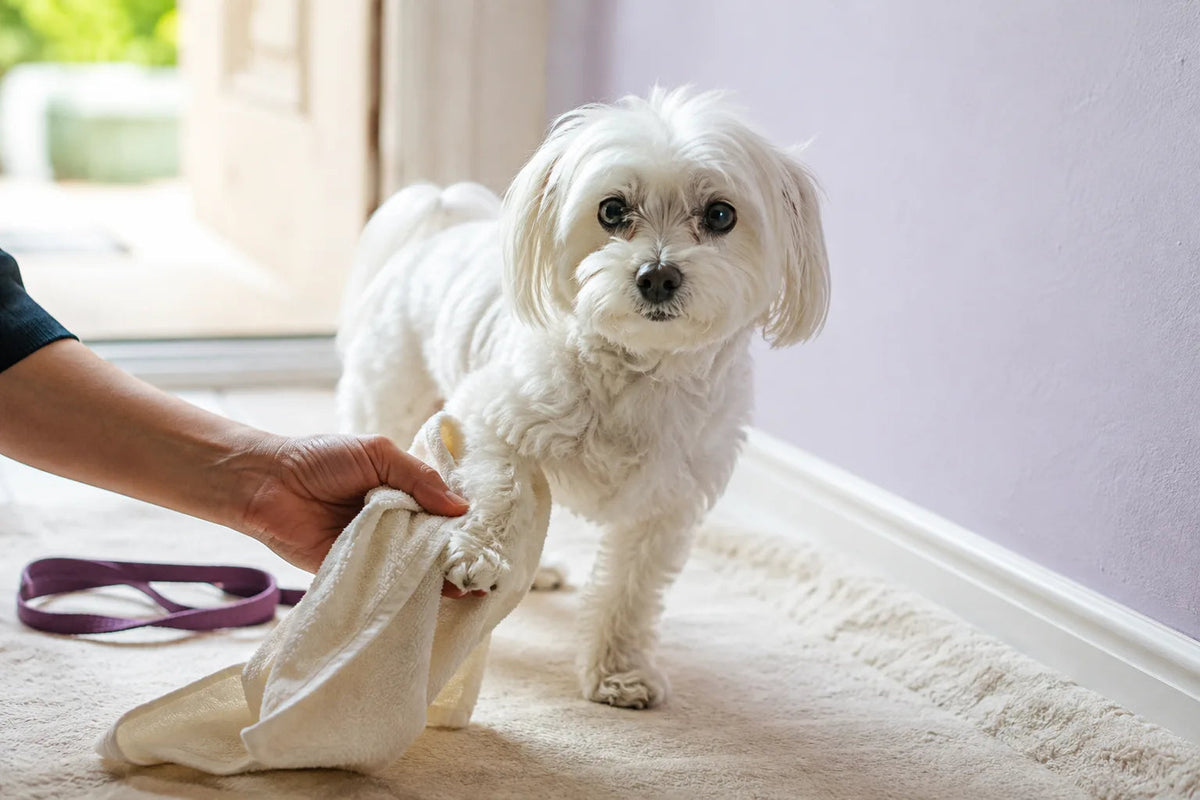
When you return home from a walk, take a short pause at the door to check your dog’s paws and clean them if needed. Paw care after a walk does not mean using the same amount of product every time. Looking at the paws first and working out what they need that day makes the routine clearer for both you and your dog.
A little preparation by the door
Keep a clean cloth, a dry towel and any product you may need within reach. Let a wet towel dry rather than folding it away for reuse later. Separating paw care supplies from shoes and floor cleaners is another practical habit: you can clearly see what you are picking up when you reach for a product.
Use a non-slip surface while handling the paws. No elaborate setup is needed; the aim is a place where your dog can keep their balance and you can work without rushing. With everything ready beforehand, you will not need to search for a towel while still holding a paw.
A quick look before cleaning
Check underneath the paws and between the toes as far as your dog allows. Is there mud, a small stone or plant material caught in the fur? The ASPCA’s paw care guidance recommends looking for foreign objects and wounds during regular checks. Do not try to pull out an object embedded in the skin; if there is bleeding, clear pain or refusal to bear weight, stop the routine and consult your vet.
Respond to the dirt you find that day
Every walk leaves a different trace. Dust after a dry pavement stroll is different from mud after a rainy trip to the park. You can gently remove visible dirt with a clean, damp cloth. Pay particular attention to road salt and similar winter residues; the RSPCA’s winter walking advice emphasises cleaning paws and drying your dog afterwards. If you suspect contact with an unknown chemical, seek guidance from your vet instead of trying to resolve it with an ordinary grooming product.
If you choose to use a paw product, read the target species, application area and wiping or rinsing instructions. MelomyPet Paw Cleansing Foam is offered for cleaning cats’ and dogs’ paws and has a silicone brush head. Its directions describe applying the foam to the paw and then wiping it off with a dry cloth or paper towel. Follow the current instructions on the pack you have; do not equate more product with better cleaning.
Drying is part of the routine too
When you have finished, gently dry underneath the paws and between the toes with a clean, dry towel. Turn a damp cloth to a clean side for the next paw. Care for the brush head according to its own instructions and check its condition after use before replacing the cap. Once you have tidied the cleaning area, you are ready for the next walk.
Finish at your dog’s pace
For a dog unused to having their paws touched, the first goal may not be to finish all four paws at once. Try short, calm sessions and pause when they want to move away or pull a paw back. The RSPCA’s grooming guide also recommends short sessions and stopping when an animal is uncomfortable. If you notice repeated licking, redness or sensitivity, consult your vet rather than adding new products. A good routine starts with observing your companion carefully, rather than completing the same procedure every day.

