
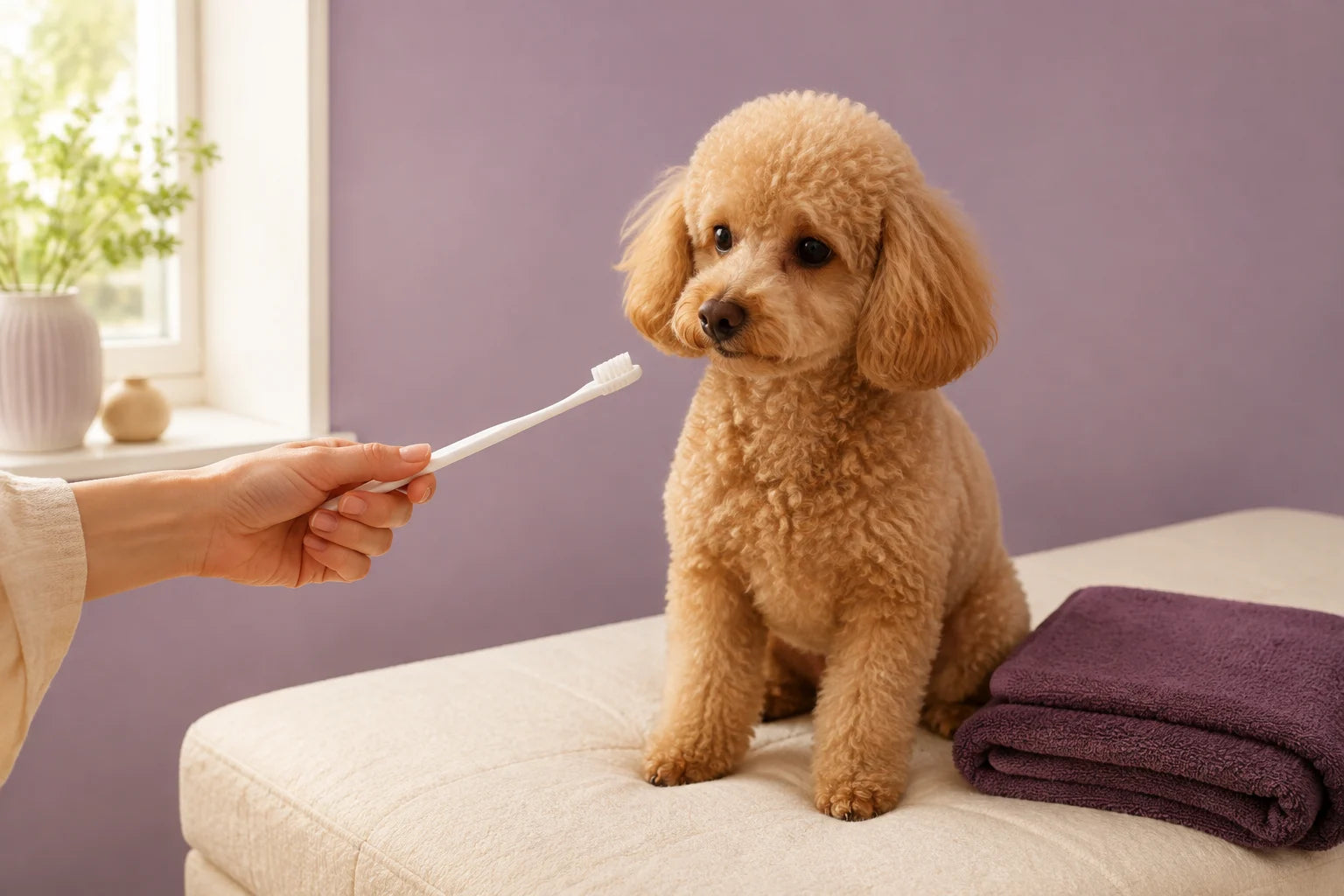
You may find yourself choosing between toothpaste and spray on the oral care shelf. Rather than deciding only by size or flavour, think about the task you will carry out with your dog: are you planning care with a brush, or considering how a spray is used? The format changes the preparation; it does not, by itself, tell you which product will resolve an oral health problem.
Compare how the two products are used
| Feature | Toothpaste | Oral spray |
|---|---|---|
| Target species | Dogs | Cats and dogs |
| Size | 50 ml | 25 ml |
| Use | Toothbrush or finger brush | Mouth or drinking water, as directed on the label |
| Distinguishing detail | Beef flavour | Zinc content |
Swipe the table sideways to see the full comparison.
Beef-Flavoured Dog Toothpaste is placed on a brush and the teeth are brushed gently. Alongside the paste, prepare a brush suited to your dog and a place where you can work comfortably. Beef flavour is a selection feature, not a promise that every dog will enjoy the taste or immediately become comfortable with brushing.
Oral & Dental Care Spray is a spray format for oral care. For use in the mouth or drinking water, check amounts and frequency on the current pack. A 25 ml bottle does not tell you how many sprays to use or how much water to add it to. Ask the manufacturer if the instructions are incomplete; do not use measurements from another spray. If several animals share the water bowl, separately confirm suitability with the manufacturer and your vet before adding it.
Brush choice and adjustment time are part of the decision
When buying toothpaste, remember that application depends on more than taste. Brush size, your dog’s response to having their face touched and your ability to work comfortably all affect preparation. VCA’s toothbrushing guide recommends introducing the tool gradually, stopping when the animal becomes unsettled and asking the veterinary team for help with technique. Do not substitute human toothpaste or a homemade baking soda mixture.
If you also have a cat, consider the supplies separately. The spray being offered for cats and dogs does not make dog toothpaste suitable for your cat. Our guide to introducing oral care is a more relevant starting point for a cat.
When should assessment come before shopping?
If there is pronounced bad breath, bleeding, pain or difficulty eating, speak to your vet rather than looking for a stronger product. AVMA’s dental care information recommends assessment for these signs and discussing oral care product choices with a vet. Do not treat visible tartar as a reason to scrape at home, brush harder with toothpaste or increase the spray amount.
Comparing toothpaste and spray does not establish either as equivalent to brushing or professional dental care. Clarify the role of your chosen product within your dog’s care plan. If you will use more than one product, each set of directions and suitability for combined use also matter.
Common questions when choosing
Do I have to buy both?
No. First decide which care step you will carry out. Buying one product does not make the other necessary; for combined use, follow the product labels and any plan from your vet.
Does beef flavour mean that it contains real meat?
A flavour name is not a complete ingredient list or information about the raw material source. If a particular ingredient matters to you, read the full list on the pack and ask the manufacturer for the details you need.
If I buy the spray, can the toothpaste also be added to water?
No. The toothpaste’s stated use is with a brush. The water application option belongs to the relevant spray’s own directions and does not extend to other products in the category.
Which bottle lasts longer?
You can compare 50 ml and 25 ml as volumes only. The application methods and amounts used differ; you cannot infer the same number of days or equal numbers of applications. Choose first by the task, then by size.


